-

How Proper Attic Ventilation Saves Your Roof and Your Heating Bill
For homeowners across Westbrook, Old Saybrook, Clinton, Madison, Guilford, Essex, Old Lyme, Chester, Killingworth, East Haven, and the Connecticut Shoreline, winter roof problems often start long before snow piles up. At NorEast Exteriors Roofing & Siding, our roof replacement Connecticut work shows that ice dams are rarely just a gutter issue. They usually point to…
-

Budgeting for an Exterior Renovation: Sizing Up Hidden Structural Variables in New Roof Estimates
A new roof estimate CT homeowners can trust should do more than show a simple square-foot price. A roof replacement is not just shingles, nails, and cleanup. It is a full exterior system review that may uncover damaged plywood, sheathing rot, poor attic ventilation, failing flashing, aging gutters, water-damaged trim, or siding tie-ins that affect…
-

Coastal Roofing Codes: Why Shoreline CT Homes Require Advanced Wind and Uplift Engineering
Homes along the Connecticut shoreline face a different kind of roofing challenge. A roof in Westbrook, Old Saybrook, Clinton, Madison, Guilford, Essex, Old Lyme, or East Lyme has to handle more than everyday rain. It has to stand up to Long Island Sound winds, wind-driven rain, salt air, freeze-thaw cycles, heavy snow, and brutal nor’easters.…
-

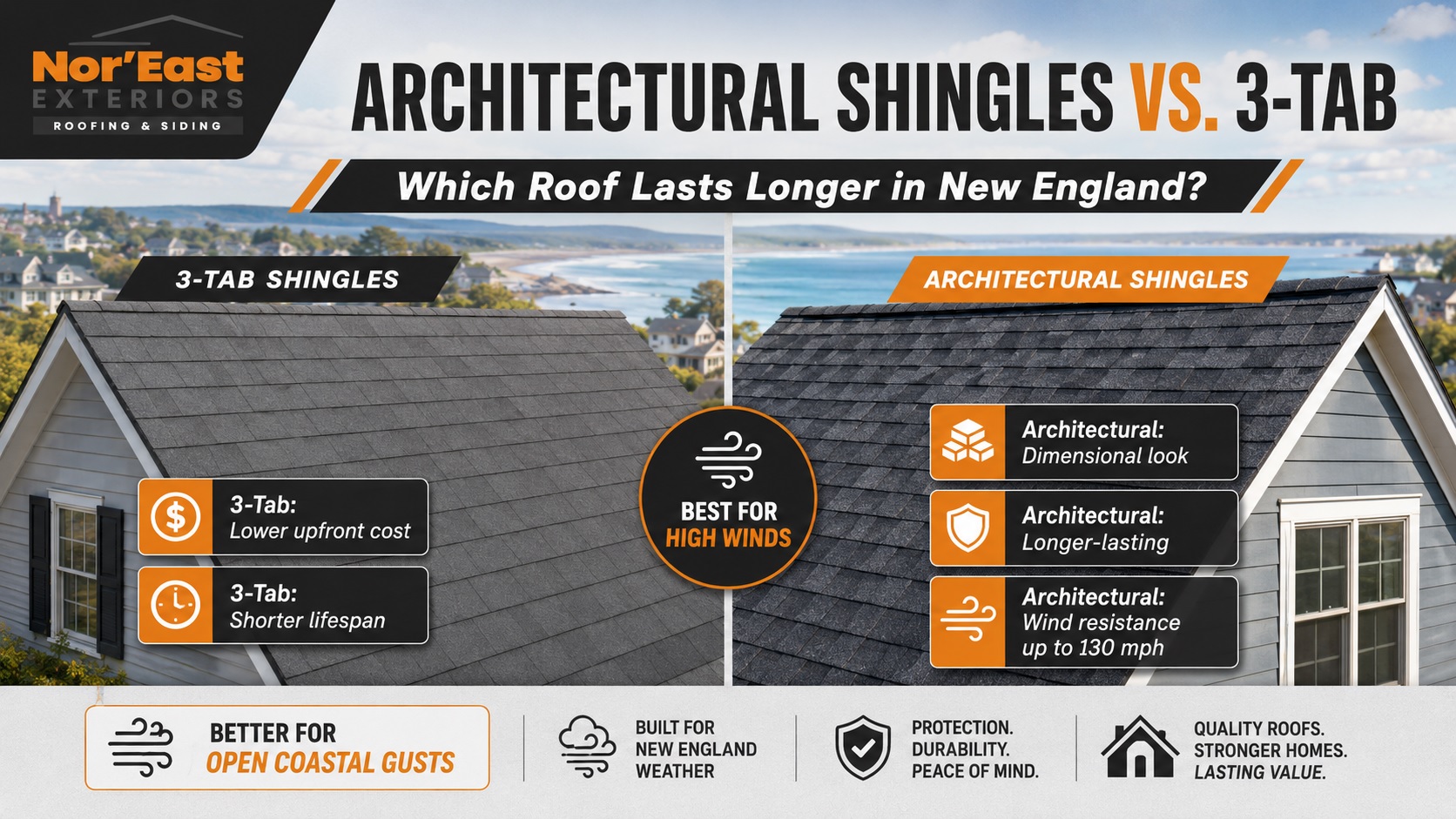
Architectural Shingles vs. 3-Tab: Which Roof Lasts Longer in New England?
When Connecticut homeowners compare architectural shingles vs 3 tab, the question usually comes down to budget versus durability. A 3-tab roof may cost less upfront, but a modern architectural shingle roof is usually the stronger long-term investment, especially for homes exposed to shoreline winds, heavy rain, snow, ice, and New England freeze-thaw cycles. At Nor’East…
-

Storm Damage Checklist: What to Do Before Calling Your Insurance Company
Storm damage can leave homeowners feeling overwhelmed. High winds, heavy rain, and falling debris can cause serious issues in a matter of minutes, especially to your roof and exterior. In the rush to fix the problem, many homeowners immediately call their insurance company. But taking a few important steps first can make a significant difference…
-

Roofing Material Comparison: Asphalt Shingles vs. Metal Roofing for CT Homes
Choosing the right roofing material is one of the biggest decisions Connecticut homeowners make when planning a roof replacement. Your roof needs to handle harsh winters, snow accumulation, heavy rain, wind, and fluctuating seasonal temperatures. While aesthetics and budget matter, long-term durability and weather performance are just as important. Two of the most common options…
-

Actual Cash Value (ACV) vs. Replacement Cost (RCV): The $10,000 Difference You Need to Know
When a major storm hits Western Connecticut or Rhode Island, homeowners often assume their insurance policy will simply “cover the roof.” However, as we move through 2026, many insurance carriers have quietly updated their language to shift the financial burden back onto the property owner. The most significant distinction in your policy is whether you…
-

When Exterior Issues Threaten the Deal: A Guide for Smart Real Estate Agents
In real estate, we’ve all experienced that “moment.” The offer is solid, the buyers are motivated and the timelines are tight but manageable. Then, the inspection report arrives and the conversation shifts instantly. It’s no longer about the price or the beautiful location-it’s about the 20-year-old roof or the aging siding. Exterior issues are among…
-
How to Identify Hail Damage on Your Roof (Without Climbing a Ladder)
After a severe Connecticut thunderstorm rolls through, the first question on every homeowner’s mind is, “Did my roof survive?” While a massive leak is obvious, hail damage is often insidious. It can slowly degrade your shingles, leading to catastrophic water intrusion months after the storm has passed. At Nor’East Exteriors Roofing & Siding, we always…
-
The Connecticut Coastal Tax: How Salt Air and Wind Impact Your Roof
Living along the Connecticut shoreline in towns like Westbrook, Old Saybrook, and Clinton offers unparalleled views, but it comes with a hidden “tax” on your home’s exterior. While inland homes deal with standard wear and tear, coastal properties face a relentless barrage of salt-saturated air and high-velocity winds off the Long Island Sound. At Nor’East…
-

Storm Damage 101: A Shoreline Homeowner’s Guide to Post-Storm Recovery
Living along the Connecticut shoreline—from Westbrook to Old Saybrook—means we get the best of the Long Island Sound, but we also get the brunt of its weather. Between sudden summer microbursts and punishing winter Nor’easters, your roof is the first line of defense against Mother Nature. When the wind stops howling and the rain clears,…
-
How Much Does Roof Flashing Repair Cost in Connecticut?
Roof flashing plays a critical role in protecting your home from water damage. If it becomes loose, rusted, cracked, or improperly sealed, leaks can develop quickly — especially with Connecticut’s heavy rain, snow, and freeze-thaw cycles. If you’re wondering how much roof flashing repair costs in Connecticut, this guide breaks down average pricing, what affects…
-
Roof Leakage Repair Cost: A 2026 Guide for Connecticut Homes
Hearing the steady drip, drip, drip of a ceiling leak during a storm is every homeowner’s nightmare. Immediate panic sets in, followed by the big question: How much is this going to cost? If you’re worried about breaking the bank, take a deep breath. While a new roof is a significant investment, most leaks can…
-
The Real Cost of Roof Replacement in Connecticut (2026 Guide)
If you are a homeowner in Westbrook, Old Saybrook, or the surrounding shoreline, you know that our homes take a beating. Between coastal winds, salt air, and heavy winter snow, your roof is your home’s most important defense. But when it comes time to replace it, the first question everyone asks is: “How much is…
-

5 Signs It’s Time to Replace Your Roof
Our home is our sanctuary, a safe haven where we create memories and build dreams. However, it requires regular maintenance to keep it functional and comfortable. One of the most crucial parts is looking after your roof. But how do you know when it’s time for a replacement? As your trusted contractor with over ten…
-

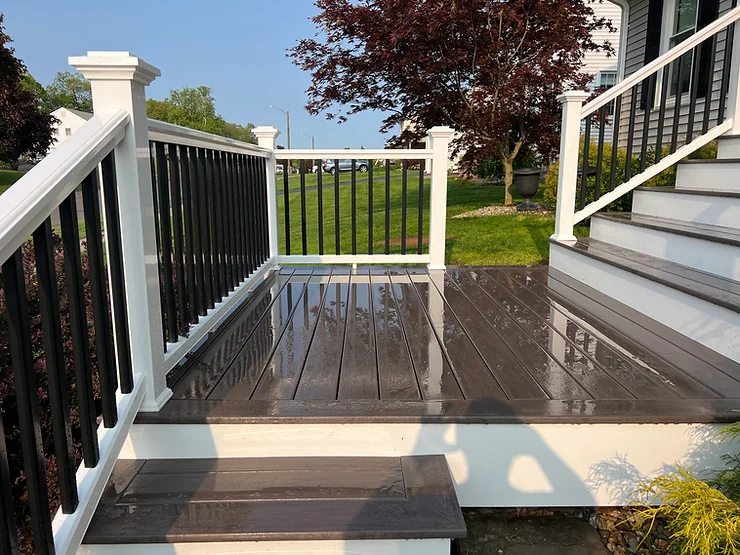
Pressure Treated vs. Composite Decks: Understanding the Benefits and Disadvantages
When it comes to building a deck for your home, choosing the right material is crucial. Pressure treated and composite decks are two popular options, each with its own set of advantages and disadvantages. Pressure Treated Decks: Pressure treated wood is a common choice for deck construction, primarily because of its affordability and durability. Here…