

For homeowners across Westbrook, Old Saybrook, Clinton, Madison, Guilford, Essex, Old Lyme, Chester, Killingworth, East Haven, and the Connecticut Shoreline, winter roof problems often start long before snow piles up. At NorEast Exteriors Roofing & Siding, our roof replacement Connecticut work shows that ice dams are rarely just a gutter issue. They usually point to a deeper roof system problem involving attic ventilation, insulation, air leaks, and heat loss.
Ice Dams Are Not Just a Gutter Problem
When snow sits on a roof, the top roof surface should stay cold enough to prevent uneven melting. Trouble starts when warm air escapes from the living space into the attic. That heat warms the underside of the roof deck, melts the snow above, and sends water running down toward the colder eaves.
Once that water reaches the overhang, it refreezes. The frozen ridge grows, traps more meltwater, and can force water under shingles. From there, moisture can stain ceilings, damage plywood, soak insulation, rot fascia, and strain gutters.
That is why ice dam prevention CT homeowners need should focus on the full attic and roof system, not only the visible ice at the gutter line.
How Balanced Attic Ventilation Works
A healthy attic uses balanced intake and exhaust ventilation. Intake vents, usually at the soffits or eaves, allow cold outside air to enter low. Exhaust vents, often at the ridge, allow warmer attic air and moisture to escape high.
This steady airflow helps:
- Keep the roof deck closer to outdoor temperature
- Reduce freeze-thaw cycles on the roof surface
- Move attic moisture out before it condenses
- Protect shingles, decking, and insulation
- Lower stress on gutters and roof edges
A proper attic ventilation roofing contractor does not simply add more vents. The system must be balanced. Too much exhaust without enough intake can pull conditioned air from the home into the attic, which can make energy loss worse. Too much blocked intake can leave hot, damp air trapped under the roof.
Ventilation and Insulation Must Work Together
Ventilation cannot fix every attic problem by itself. If the attic floor has air leaks around recessed lights, plumbing penetrations, bath fans, chimney chases, or attic hatches, warm indoor air can still rise into the attic.
That is where air sealing and insulation come in. Air sealing slows heat movement from the living area. Insulation helps hold heat where it belongs. Ventilation helps remove moisture and keep the roof deck cold.
Together, these three parts protect the roof while helping the heating system work less during winter. When less warm air leaks into the attic, more paid heat stays inside the living space.
Warning Signs of Poor Attic Ventilation
A roof can look fine from the street while ventilation issues are active beneath the shingles. Connecticut homeowners should watch for:
- Large icicles along the eaves
- Ice dams that return every winter
- Uneven snow melt on the roof
- Water stains near ceilings or exterior walls
- Mold or musty odors in the attic
- Damp or compressed insulation
- Rusted roofing nails visible in the attic
- Shingles curling or aging too soon
- Gutters pulling away from fascia
If these signs appear, a roof inspection should include the attic, not just the shingles.
Why This Matters During Roof Replacement
A roof replacement Connecticut project is the best time to correct hidden ventilation problems. Once old shingles come off, a contractor can evaluate decking, ridge ventilation, soffit airflow, intake balance, underlayment, flashing, and ice barrier placement.
NorEast Exteriors Roofing & Siding provides roofing services for Connecticut homeowners who need repairs, full replacements, and system-level exterior solutions. A roof should not be treated as a single layer of shingles. It should be built as a complete weather protection system.
For homeowners planning a larger project, this guide on new roof estimate variables explains why ventilation, decking, flashing, and gutter connections can affect the final scope.
Where Seamless Gutters Fit Into Ice Dam Prevention
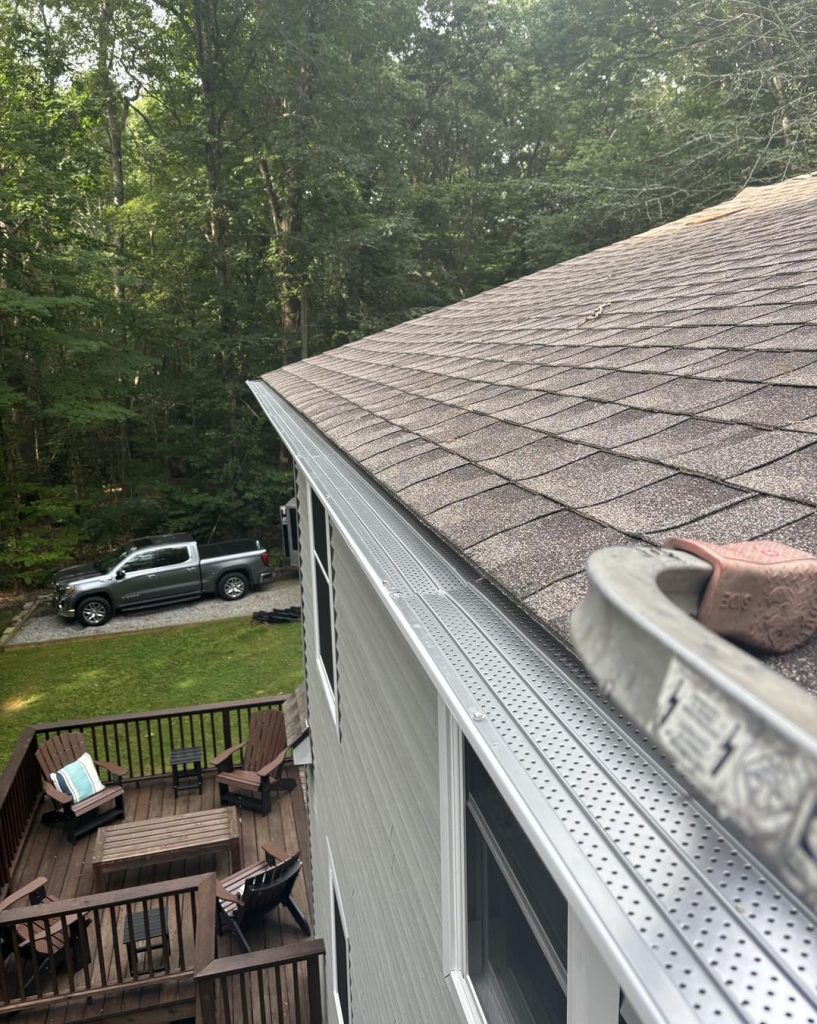
Gutters do not cause every ice dam, but clogged, sagging, or undersized gutters can make winter water problems worse. A clean, properly pitched gutter system helps move meltwater away from the roof edge when temperatures rise.
That is why seamless gutters installation often belongs in the same conversation as roofing and ventilation. Gutters, soffits, fascia, drip edge, and attic airflow all meet at the eave. If one part fails, the whole edge of the roof can become vulnerable.
Homeowners dealing with leaf buildup may also benefit from reading NorEast’s guide on gutter guards vs regular cleaning.
The Financial Return: Fewer Repairs and Lower Heat Loss
Proper attic ventilation helps protect the roof, but the real savings often come from the full attic upgrade. Air sealing reduces heat loss. Better insulation keeps rooms more comfortable. Balanced ventilation helps control moisture and ice dam risk.
That can mean fewer emergency winter calls, fewer ceiling stains, less damaged insulation, longer shingle performance, and a more predictable heating bill.
For homes along the Connecticut Shoreline, where winter snow, coastal moisture, wind, and freeze-thaw cycles can overlap, these improvements provide practical long-term value.
Protect the Roof Before Winter Damage Starts
Ice dams are a symptom, not the root problem. The better solution is a roof system that manages heat, airflow, moisture, and drainage before winter storms arrive.
NorEast Exteriors Roofing & Siding helps Connecticut homeowners protect their homes with roofing, attic ventilation guidance, roof replacement, gutter installation, and exterior repair services. Schedule a professional inspection through the NorEast roofing team before small winter warning signs become expensive interior damage.
FAQ
What causes ice dams on Connecticut roofs?
Ice dams usually form when heat escapes into the attic, warms the roof deck, melts snow, and sends water down to colder eaves where it refreezes.
Can attic ventilation prevent ice dams?
Proper attic ventilation can reduce ice dam risk by helping keep the roof deck cold. It works best when paired with air sealing and insulation.
Do gutters need to be replaced to prevent ice dams?
Not always. Gutters should be clean, secure, and properly pitched. If they are sagging, leaking, or pulling away from fascia, replacement may help protect the roof edge and foundation.
Should ventilation be checked before roof replacement?
Yes. A roof replacement is the right time to evaluate soffit intake, ridge exhaust, baffles, decking condition, ice barrier placement, and gutter connections.