

An ice dam roof leak usually develops when melting snow refreezes along the roof’s edge, trapping water that can seep beneath shingles. Common signs include thick ice buildup, icicles, and ceiling stains near exterior walls during snowmelt. A conventional roof leak is more likely to involve damaged shingles, failed flashing, or deteriorated roofing materials and may occur during rain without snow. Both problems can happen together, so professional inspection is the most reliable way to identify the cause.
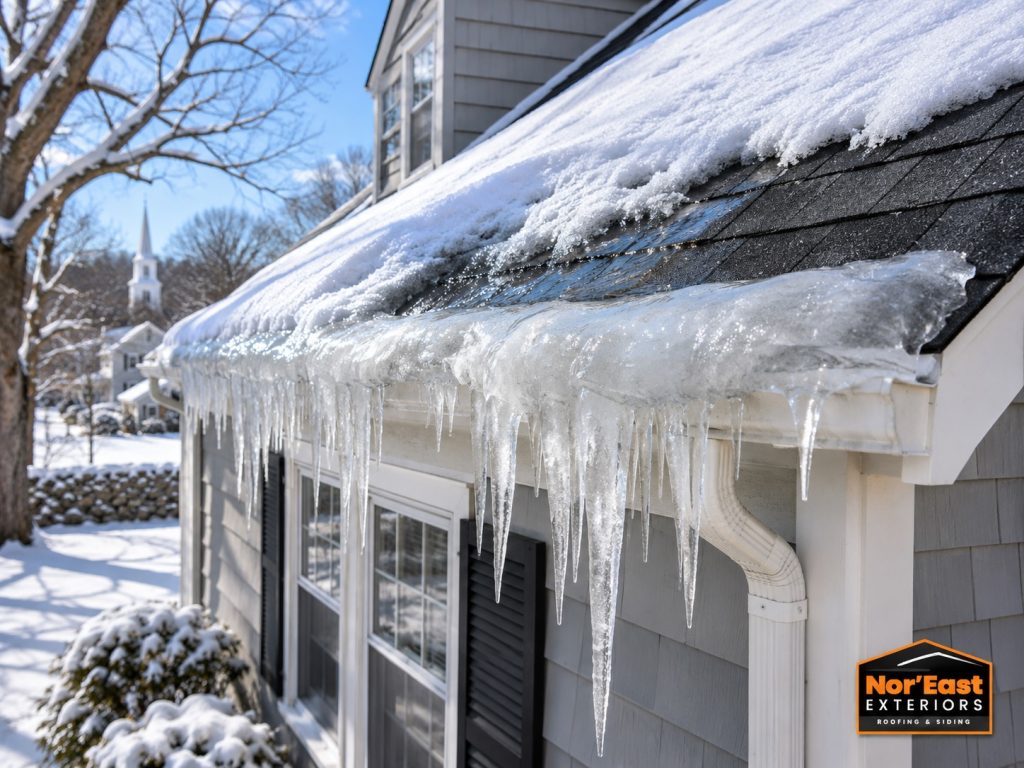
Ice Dam vs. Roof Leak: What’s the Difference?
Connecticut winters bring snow, freezing temperatures, ice buildup, and repeated thawing cycles.
When water stains suddenly appear on a ceiling, homeowners often assume their roof has developed a leak.
However, the source may be an ice dam rather than a conventional roofing defect.
At Nor’East Exteriors Roofing & Siding, we help homeowners throughout Westbrook and the Connecticut shoreline identify winter roofing problems before they lead to extensive interior damage.
The important distinction is how water enters the roofing system.
An ice dam traps melting snow behind a ridge of ice, allowing water to back up beneath roofing materials.
A conventional roof leak occurs when water enters through damaged shingles, deteriorated flashing, or another vulnerable roof component.
An ice dam can cause a roof leak, so these conditions are not mutually exclusive.
What Causes an Ice Dam Roof Leak?
Ice dams develop when different sections of the roof have different surface temperatures.
Warm air escaping from the home can heat the roof deck and melt accumulated snow.
The meltwater travels downward until it reaches colder roof edges, where it freezes again.
As ice accumulates, additional water becomes trapped behind it.
According to the University of Minnesota Extension, trapped meltwater can enter beneath roof coverings and damage ceilings, insulation, and walls.
Poor attic air sealing, insufficient insulation, and inadequate ventilation can contribute to this process.
7 Signs to Tell an Ice Dam From a Regular Roof Leak
1. Water Appears During Snowmelt
One of the strongest clues involves when the leak develops.
If ceiling stains appear during a winter thaw, especially after snow has accumulated, ice dam damage becomes a possibility.
Conventional roof leaks can develop during rainstorms regardless of the season.
2. Thick Ice Forms Along the Roof Edge
Visible ridges of ice near gutters and eaves suggest that melted snow may be refreezing before it drains.
Large icicles can accompany ice dams, although icicles alone do not confirm a problem.
We recommend having repeated ice buildup professionally evaluated.
3. Water Stains Appear Near Exterior Walls
Ice dam leaks frequently affect ceilings and walls near the roof’s lower edges.
Water may travel through insulation and framing before becoming visible indoors.
However, interior stain locations do not always reveal the exact entry point.
4. The Roof Leaks During Rain Without Snow
If water enters the home during ordinary rainfall, damaged roofing materials or flashing become more likely causes.
Missing shingles, deteriorated sealant, and poor roof penetrations can allow water to bypass protective layers.
These defects should be inspected even when winter ice buildup is also present.
5. Moisture Appears Around Chimneys or Skylights
Chimneys, skylights, plumbing vents, and roof valleys contain transitions where flashing helps prevent water intrusion.
Damaged flashing can allow rainwater or melting snow to enter.
Leaks around these locations may indicate a roofing defect, ice-related water backup, or both.
6. Shingles or Flashing Show Visible Damage
Missing shingles, lifted edges, exposed fasteners, and damaged flashing can indicate an underlying roof problem.
Connecticut’s coastal winds and freeze-thaw cycles may worsen existing weaknesses.
A professional inspection can determine whether targeted repairs are sufficient.
7. Your Attic Shows Moisture or Uneven Snowmelt
Wet insulation, damp roof sheathing, and uneven snowmelt can indicate heat loss or moisture problems.
We recommend evaluating attic conditions alongside the roof exterior when ice dams return repeatedly.
Ice Dam vs. Roof Leak Comparison Chart
| Warning Sign | Ice Dam More Likely | Conventional Leak More Likely |
|---|---|---|
| Appears during snowmelt | Yes | Possible |
| Thick ice along eaves | Common | Not required |
| Stains near exterior walls | Common | Possible |
| Leaks during rain without snow | Less typical | Common |
| Damaged shingles or flashing | May coexist | Common |
| Poor attic insulation | Contributing factor | Not necessarily |
| Recurs after winter thaws | Common | Possible |
These are diagnostic clues, not definitive tests. Both causes may be present simultaneously.
What Should You Do When Your Roof Leaks During Winter?
Whether the cause is an ice dam or damaged roofing materials, prompt action can help limit water damage.
We recommend:
- Contain indoor water. Use buckets or protective coverings where safe.
- Document the damage. Photograph ceiling stains, visible ice, and affected belongings.
- Avoid climbing onto an icy roof. Snow and ice create serious fall hazards.
- Never chip ice from shingles. Sharp tools can damage roofing materials.
- Contact a roofing professional. An inspection can identify the entry point and appropriate repair.
If water approaches electrical fixtures or wiring, avoid the affected area and arrange qualified assistance.
Our professional ice dam removal services in Westbrook, CT help address dangerous ice accumulation while protecting existing roofing materials.
How to Prevent Ice Dam Damage and Winter Roof Leaks
Preventing winter roof problems requires more than clearing snow from gutters.
We recommend evaluating the complete roofing and attic system.
Improve Attic Insulation: Proper insulation reduces heat transfer from living spaces into the attic.
Seal Attic Air Leaks: Gaps around attic hatches and ceiling penetrations can allow warm indoor air to reach the roof deck.
Maintain Proper Ventilation: Balanced ventilation helps control attic temperatures and moisture when combined with air sealing and insulation.
Inspect Roofing Materials: Damaged shingles and flashing should be repaired before winter weather creates additional problems.
Maintain Gutters: Clear drainage channels help manage runoff, although clean gutters alone cannot prevent ice dams.
For additional prevention advice, read our related guide, How Proper Attic Ventilation Saves Your Roof and Your Heating Bill.
Frequently Asked Questions
Can an ice dam cause a roof leak even with good shingles?
Yes. Water trapped behind ice can back up beneath roofing materials, even when the visible shingles appear intact.
Will an ice dam leak stop when the weather gets colder?
It may temporarily stop when melting water refreezes. However, the underlying problem remains and leakage can return during the next thaw.
Does removing an ice dam fix the roof leak permanently?
Removing accumulated ice may stop immediate water backup. Long-term prevention may require attic improvements or repairs to damaged roofing materials.
Can roof leaks happen without ice dams during winter?
Yes. Damaged flashing, missing shingles, deteriorated roofing materials, and wind-driven rain can cause winter leaks independently of ice buildup.
Protect Your Connecticut Home With Nor’East Exteriors Roofing & Siding
Whether you’re dealing with an ice dam roof leak, damaged shingles, or unexplained winter ceiling stains, identifying the source is essential.
At Nor’East Exteriors Roofing & Siding, we provide professional roof inspections, ice dam removal, roof repairs, and roofing replacements throughout Westbrook, Old Saybrook, Clinton, Madison, Guilford, and surrounding Connecticut shoreline communities.
Our team evaluates both visible roof damage and underlying conditions to recommend appropriate solutions.