

Curling shingles can result from normal aging, excessive attic heat, moisture, installation problems, or weather exposure. One or two damaged shingles may sometimes be repairable, but widespread curling can indicate broader deterioration. When curling appears across several roof areas with cracking, granule loss, brittleness, or leaks, we recommend a professional inspection to determine whether roof repair or replacement makes more sense.
For Connecticut homeowners, especially along the shoreline, curled asphalt shingles deserve attention. Wind, moisture, temperature swings, and normal roof aging can all affect how shingles perform.
The key is understanding that a few curled shingles and widespread curling are not the same roofing problem.
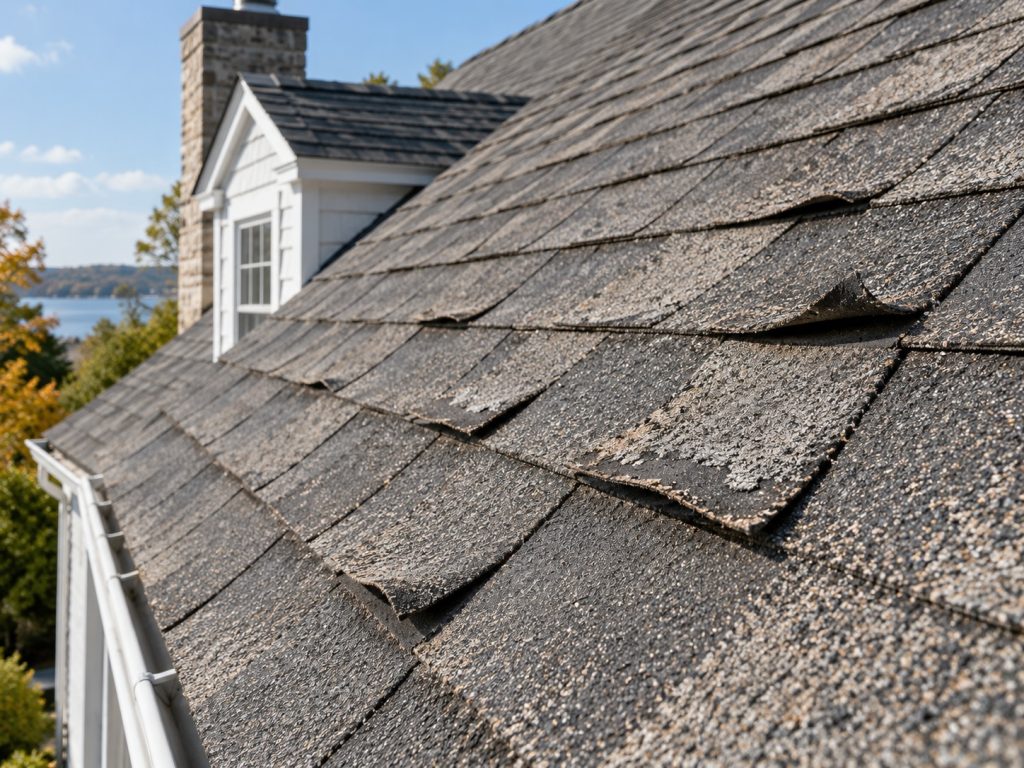
What Do Curling Roof Shingles Look Like?
Curling roof shingles usually develop visible changes around their edges or corners. From the ground, homeowners may notice:
- Bottom edges turning upward
- Corners lifting away from the roof
- Shingles forming a shallow cup
- Tabs that no longer sit flat
- Wavy or distorted areas
- Cracking around curled edges
GAF recommends watching for curled, cracked, warped, loose, or missing shingles as part of a roof-condition check.
We recommend evaluating suspicious roofing from the ground rather than walking on shingles that may already be brittle or damaged.
Why Do Asphalt Roof Shingles Curl?
Several conditions can cause asphalt shingles to distort.
1. The Shingles Are Getting Old
Asphalt shingles gradually lose flexibility as they age. Corners and edges can begin curling, while granule loss and cracking may become more noticeable.
GAF notes that shingles becoming cracked, brittle, or curled can indicate that they are reaching the end of their useful service life.
A single curled shingle does not automatically mean the entire roof has failed. The extent of deterioration matters.
2. Poor Attic Ventilation
The roof protects the home from above, while attic ventilation helps manage conditions underneath it.
Excessive attic heat and trapped moisture can contribute to premature roofing deterioration. Poor airflow can also affect insulation, roof decking, and other parts of the roof system.
For a deeper explanation of intake, exhaust, ridge vents, and gable vents, see our guide to proper attic ventilation.
3. Moisture Below the Roofing System
Humidity, condensation, poor airflow, or moisture in the roof deck can affect more than the visible shingles.
Persistent moisture may contribute to wet insulation, deterioration of roof decking, and premature roofing problems. GAF also identifies moisture and poor ventilation as possible contributors to sheathing deterioration.
4. Installation Problems
Curling can sometimes be related to installation rather than age.
Possible causes include improper nail placement, exposed or high fasteners, wrinkled underlayment, poor deck preparation, or incorrect fastening patterns.
We do not assume installation is responsible simply because a shingle curls. An inspection should determine whether the deformation comes from installation, material aging, moisture, or another cause.
5. Wind and Storm Exposure
Curling and wind lifting are different problems.
Strong coastal winds and nor’easters can break shingle seals and leave tabs lifted, creased, torn, or missing. That can sometimes resemble curling from the ground.
Connecticut shoreline roofs deserve particular attention after significant wind events because broken seals can leave shingles more vulnerable to future weather.
6. Cold-Weather Curling
Shingle appearance can sometimes change during colder conditions. Slight edge distortion may become more noticeable in winter and lessen as temperatures rise.
Persistent curling should still be evaluated, especially when large areas are affected or the shingles also show brittleness, cracks, leaks, or possible wind damage.
Curling vs. Lifting vs. Buckling Shingles
| Condition | What It Looks Like | Possible Causes | Typical Next Step |
|---|---|---|---|
| Curling | Edges or corners turn upward | Age, heat, moisture, ventilation | Inspect extent and cause |
| Lifting | Shingle separates from roof | Wind, failed seal | Assess damaged shingles |
| Buckling | Raised waves or ridges | Deck, underlayment, moisture | Inspect roofing system |
| Cracking | Splits through shingles | Aging, weathering, stress | Evaluate overall condition |
The table helps identify the symptom, but the roof should not be declared repairable or replaceable from appearance alone.
Can Curling Shingles Cause Roof Leaks?
Yes, severely curled shingles can increase the risk of water intrusion because they no longer lie flat and shed water as intended.
Risk increases when curling occurs alongside broken seals, cracks, missing granules, flashing problems, deteriorated underlayment, or wind-driven rain.
Visible curling does not automatically mean an active leak is already present.
Can Curling Roof Shingles Be Repaired?
Localized curling may sometimes be handled through professional roof repair when only a few shingles are affected, surrounding shingles remain healthy, the roof deck is sound, and the roof still has substantial service life remaining.
Repair becomes less practical when deterioration is widespread.
We also avoid recommending DIY flattening, heating, roofing cement applications, or walking across damaged shingles. Finding the reason for the curling comes first.
When Do Curling Shingles Mean the Roof Should Be Replaced?
Roof replacement becomes more likely when curling is only one symptom of broader deterioration.
Warning signs can include:
- Curling across several roof slopes
- Large numbers of affected shingles
- Brittle or cracked shingles
- Extensive granule loss
- Repeated roof repairs
- Recurring leaks
- Moisture-damaged decking
- A roof already approaching the end of its service life
GAF similarly distinguishes between a few damaged shingles that may be replaceable and broader damage that can justify considering a new roof.
What Connecticut Homeowners Should Check From the Ground
Look for curling edges, missing shingles, cracks, exposed areas with granule loss, lifted tabs, sagging sections, damaged flashing, roofing debris, granules around downspouts, and water stains inside the home.
Do not walk across a roof with curled or brittle shingles.
Repair the Cause, Not Just the Curled Shingle
Replacing one visibly damaged shingle will not correct a widespread aging problem, poor attic airflow, moisture below the roof, or an installation defect.
At Nor’East Exteriors Roofing & Siding, we look at how widespread the damage is, the condition of nearby shingles, roof age, ventilation, decking, possible leakage, and evidence of wind or storm damage before discussing the next step.
Localized damage may still be repairable. Widespread curling deserves a complete roof-system evaluation before choosing between repair and replacement.
Nor’East Exteriors Roofing & Siding can inspect curled, lifted, cracked, or damaged shingles throughout Westbrook, the Connecticut shoreline, and surrounding service areas.
Frequently Asked Questions
Are curling shingles a sign that a roof needs replacement?
Not automatically. A few damaged shingles may be repairable. Widespread curling combined with cracking, brittleness, granule loss, or recurring leaks can indicate broader roof deterioration.
What causes shingles to curl upward?
Common causes include normal aging, excessive attic heat, moisture, ventilation problems, installation issues, and certain weather conditions.
Can curled shingles be flattened?
Flattening should not be treated as a general DIY repair. The cause of the curling and condition of the shingle should be evaluated first.
Can poor attic ventilation cause shingles to curl?
Poor ventilation can contribute to excess attic heat and moisture, conditions associated with premature roofing deterioration.
Will curling shingles leak?
Curling can increase vulnerability to water intrusion because the roofing surface may no longer lie flat, but visible curling does not prove that a leak is already active.