
For Connecticut shoreline homes, siding is not just a curb appeal upgrade. It is the outer defense system against salt air, wind-driven rain, freeze-thaw movement, summer humidity, and storm debris coming off Long Island Sound.
That is why the hardie plank vs vinyl siding debate matters so much for homeowners in Westbrook, Old Saybrook, Clinton, Madison, Guilford, Essex, Old Lyme, Chester, East Lyme, Branford, and surrounding coastal Connecticut communities. Both products can work well when installed correctly, but they do not perform the same under coastal pressure.
At Nor’East Exteriors Roofing & Siding, our approach is simple: match the siding material to the home, exposure level, architectural style, budget, and long-term maintenance expectations. A sheltered inland colonial may not need the same siding system as a waterfront cape facing salt spray and winter storms.
Which Siding Holds Up Best on the Connecticut Coast?
For many coastal Connecticut homes, James Hardie fiber cement siding is the stronger long-term choice because it offers excellent dimensional stability, a wood-like profile, strong impact resistance, and better architectural compatibility for historic or traditional neighborhoods.
Heavy-gauge vinyl siding can still be a smart option when budget, lower maintenance, and faster installation matter most. The key is avoiding thin, low-end panels that may be more vulnerable to cracking, warping, fading, or blow-off in demanding New England conditions.
Connecticut Coastal Conditions Are Tough on Siding
Shoreline homes deal with a combination of stressors that inland properties may experience less often:
- Salt-laden air that can accelerate wear on exterior materials and fasteners
- High wind exposure during coastal storms
- Wind-driven rain that pushes moisture into weak wall assemblies
- Freeze-thaw cycles that stress seams, trim, and joints
- Humidity that can expose poor ventilation or water management
- Flying debris during nor’easters and severe thunderstorms
- Historic district standards that may limit modern-looking materials
For homeowners comparing the best siding for coastal homes, the right answer is not always the cheapest product. The better question is: which siding system protects the wall assembly, preserves curb appeal, and holds its shape for decades?
Hardie Plank vs. Vinyl Siding: Head-to-Head Comparison
| Category | James Hardie Fiber Cement | Heavy-Gauge Vinyl Siding |
|---|---|---|
| Coastal wind resistance | Strong when properly fastened over a sound substrate | Can perform well when wind-rated and installed correctly |
| Salt air performance | Resists rot, pests, and moisture damage when detailed properly | Does not rot, but lower-grade panels may fade or become brittle over time |
| Impact resistance | Dense material handles many common exterior impacts well | Flexible, but thinner panels can crack in cold weather or from debris |
| Thermal movement | More dimensionally stable than vinyl | Expands and contracts more with temperature swings |
| Historic curb appeal | Strong wood-lap appearance, often better for traditional homes | Improved styles exist, but some products look less authentic |
| Maintenance | Periodic washing, caulk inspection, and repainting depending on finish | Periodic washing, occasional panel replacement if damaged |
| Typical upfront cost | Higher | Lower |
| Long-term value | Strong for premium curb appeal and durability | Strong for budget-sensitive replacement projects |
Fiber Cement: Why Hardie Plank Performs Well Near the Shoreline
James Hardie siding, often called Hardie Plank, is made from fiber cement. That means it has a solid, dense profile compared with lightweight vinyl panels. For Connecticut coastal homes, that density matters.
Fiber cement does not melt like vinyl can near extreme heat sources. It does not become wavy from improper thermal movement in the same way lower-grade vinyl can. It also creates deeper shadow lines that look closer to traditional painted wood lap siding, which is a major advantage on older New England homes.
For homeowners near Old Saybrook, Essex, Guilford, Madison, or Old Lyme, that traditional appearance can be just as important as durability. Many shoreline homes have architectural details worth preserving: cedar-style textures, wide trim, symmetrical facades, historic porch lines, and classic New England proportions.
Hardie Plank fits that look better than many economy vinyl products.
Vinyl Siding: Where It Still Makes Sense
Vinyl siding has improved significantly over the years. Premium vinyl panels can offer good color options, clean profiles, lower maintenance, and a more budget-friendly installation compared with fiber cement.
For a homeowner who wants a practical refresh without the higher cost of fiber cement, heavy-gauge vinyl can make sense. It can also be a strong fit for rental properties, secondary homes, or houses outside stricter historic districts.
The caution is product quality. Thin builder-grade vinyl is not the same as a premium, wind-rated panel. On the Connecticut coast, siding should be selected with wind exposure, fastening details, wall condition, and trim integration in mind.
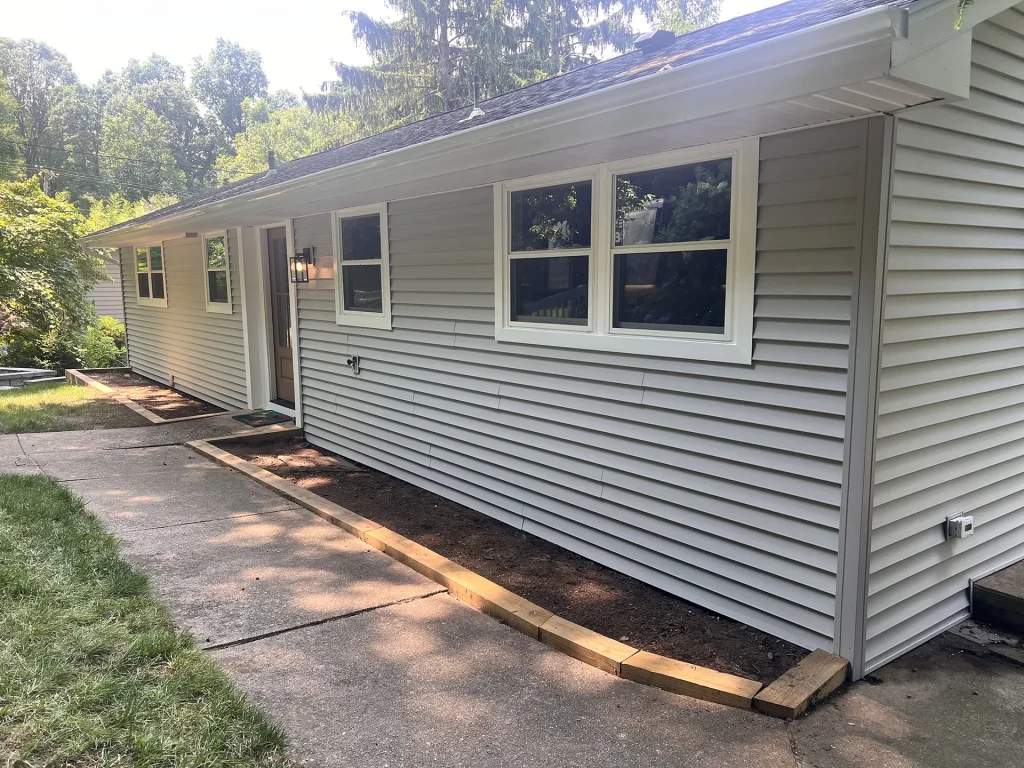
When vinyl is chosen, our team looks closely at:
- Panel thickness and rigidity
- Wind rating and product specifications
- Locking system strength
- Fastener spacing
- Existing sheathing condition
- Housewrap and flashing details
- Trim transitions around windows, doors, corners, and rooflines
A good vinyl installation is more than hanging panels. It is a complete exterior system.
Wind Resistance: Coastal Homes Need More Than Pretty Siding
Wind is one of the biggest siding concerns along the Connecticut coast. A siding product can look great on day one, but poor fastening, weak sheathing, or unverified wind ratings can create problems during a storm.
Fiber cement performs well because it is installed as a more rigid cladding system. It relies on proper fastening, clearances, flashing, and substrate condition. When installed correctly, it creates a strong outer layer that resists movement.
Vinyl siding depends heavily on its locking system, fastener placement, and ability to expand and contract. Premium vinyl panels can be engineered for higher wind performance, but lower-end products are more vulnerable to rattling, loosening, or panel displacement.
For coastal homes, the best siding choice often comes down to exposure. A protected inland street in Clinton is different from a waterfront property in Old Saybrook or Westbrook. Our storm damage repair experience helps us look beyond appearance and assess how the full exterior envelope handles weather.
Salt Air and Moisture: The Hidden Coastal Test
Salt air is not always dramatic. It works slowly. It attacks exposed metal, weak coatings, fasteners, caulking, and trim details. Moisture also finds small gaps around windows, doors, corners, and roof-wall intersections.
James Hardie siding resists rot and pest damage, but it still needs proper installation. Clearances, flashing, sealing, and trim detailing matter. Fiber cement should never be treated like a shortcut material. It performs best when every joint and transition is handled with care.
Vinyl siding will not rot, which is one of its biggest advantages. However, it can hide moisture issues behind the panels if the water-resistive barrier, flashing, or drainage plane is poorly installed. On shoreline homes, trapped moisture can become a serious problem.
That is why siding replacement should include a wall condition review, not just a material swap.
Impact Resistance: Hail, Branches, and Flying Debris
Connecticut storms can throw branches, patio items, and loose debris against siding. Winter cold can also make some materials less forgiving.
Fiber cement has a harder surface and better resistance to many daily impacts. It is not indestructible, but it gives coastal homes a durable shell that feels closer to traditional wood in strength and texture.
Vinyl siding has flexibility, which can help in certain minor impacts. However, lower-grade vinyl can crack, dent, or puncture, especially when temperatures are low. Replacing individual vinyl panels is possible, but color matching can become harder as the siding ages.
For homes near trees, exposed corners, driveways, decks, and narrow side yards, impact resistance should be part of the siding discussion.
Historic and Aesthetic Value: Why Hardie Often Wins in Older CT Communities
Connecticut shoreline towns have a strong architectural identity. From historic homes in Old Lyme and Essex to traditional colonials in Guilford and Chester, exterior changes need to respect the character of the property.
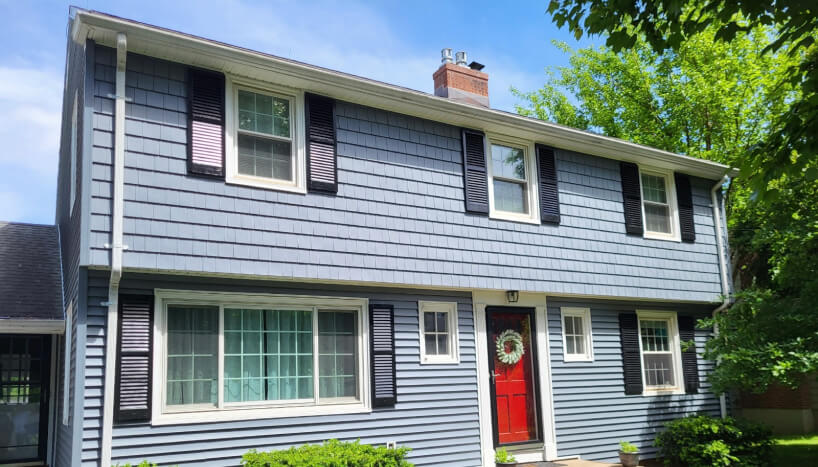
This is where fiber cement has a clear advantage. Hardie Plank can mimic painted wood lap siding with crisp lines and deeper shadowing. It can support a more historically appropriate look than flat, shiny, or thin-looking vinyl panels.
Historic district commissions often focus on visible exterior changes, material compatibility, scale, profile, finish, and the overall character of the building. While every town has its own process, homeowners in historic areas should expect more scrutiny when replacing siding.
Fiber cement may help a project feel more compatible because it can preserve the rhythm and appearance of traditional wood siding without requiring the same level of wood maintenance.
For homeowners who want to improve curb appeal while respecting neighborhood character, Hardie Plank is often the stronger design choice.
Thermal Performance and New England Temperature Swings
Connecticut siding has to handle humid summers, freezing winters, and fast temperature changes during spring and fall.
Vinyl expands and contracts more than fiber cement. Proper installation allows for this movement. When vinyl is nailed too tightly or installed without enough movement space, it can buckle, ripple, or warp.
Fiber cement is more dimensionally stable, which helps maintain straighter wall lines and cleaner profiles. It still needs proper gaps, flashing, and caulking, but it does not move as dramatically with temperature changes.
For thermal performance, siding itself is only one part of the equation. Insulation, air sealing, housewrap, sheathing condition, and window details all affect comfort. Insulated vinyl may add some thermal benefit, but it should not be treated as a substitute for a complete building envelope strategy.
Our roofing services and siding work often overlap because roofs, gutters, siding, trim, and flashing all work together. A home with great siding but poor roofline drainage can still develop moisture problems.
James Hardie Siding Cost CT: What Homeowners Should Expect
The phrase james hardie siding cost ct is searched often because homeowners want a realistic budget before requesting an estimate. Costs vary by home size, tear-off needs, wall height, trim details, repairs, finish selection, and access.
Here is a practical planning range for Connecticut siding projects:
| Siding Option | Estimated Installed Cost Range | Best Fit |
| Standard vinyl siding | Lower cost range | Budget-focused exterior refresh |
| Premium heavy-gauge vinyl | Mid-range | Better wind resistance and curb appeal |
| James Hardie fiber cement | Higher range | Long-term durability, historic look, premium resale value |
| Fiber cement with extensive trim package | Highest range | Historic, coastal, or high-end exterior transformation |
Hardie Plank usually costs more upfront than vinyl. That higher cost often reflects heavier material, more detailed installation requirements, trim integration, and labor intensity.
For many shoreline homeowners, the question is not only the initial price. It is whether the siding will still look sharp after years of salt air, storms, and freeze-thaw cycles.

Maintenance and Lifespan: 30-50 Years vs. Budget Replacement Cycles
Fiber cement siding is often selected for long-term durability. With proper installation and maintenance, many homeowners view it as a 30-50 year exterior investment. Maintenance may include washing, caulk inspections, touch-ups, and eventual repainting depending on the finish system.
Vinyl siding can also last for decades, especially when premium products are installed correctly. However, lower-end vinyl may show aging sooner through fading, brittleness, warping, cracking, or panel damage.
Maintenance comparison:
| Task | Hardie Plank | Vinyl Siding |
| Routine washing | Yes | Yes |
| Painting | Possible over time, depending on finish | Usually not painted |
| Caulk inspection | Yes | Around trim and penetrations |
| Panel replacement | More involved | Often easier |
| Fade management | Strong with quality finish | Depends heavily on product grade |
| Long-term curb appeal | Strong traditional look | Strong if premium product is chosen |
ROI: Which Siding Adds More Value?
Both siding types can improve home value by cleaning up curb appeal and protecting the structure. The stronger ROI depends on the neighborhood, buyer expectations, and current home condition.
Hardie Plank often has an edge in premium shoreline markets because it looks closer to wood, feels substantial, and supports classic New England architecture. For homes in Old Saybrook, Essex, Guilford, Madison, and Old Lyme, buyers may notice the difference between fiber cement and lower-grade vinyl.
Vinyl siding can still deliver excellent value when the existing exterior is worn, damaged, or outdated. A clean vinyl installation can make a home look refreshed quickly and affordably.
The best ROI comes from choosing the siding that fits the home, not forcing one product into every situation.
When Vinyl Is the Better Choice
Vinyl may be the better choice when:
- Budget is the top priority
- The home is not in a historic district
- The property is not in a high-exposure waterfront location
- The homeowner wants lower upfront maintenance
- A premium panel is selected instead of entry-level vinyl
- Fast installation matters
When Hardie Plank Is the Better Choice
Hardie Plank may be the better choice when:
- The home is near salt air or higher wind exposure
- Traditional wood-lap appearance matters
- The property is historic or architecturally sensitive
- Long-term curb appeal is a priority
- The homeowner wants a premium exterior upgrade
- The siding should pair with detailed trim, gutters, and roofing improvements
For design-sensitive projects, our guide on matching siding and gutters for curb appeal is a helpful next read.
Our Recommendation for Connecticut Shoreline Homes
For coastal Connecticut homes, our recommendation is usually this:
Choose James Hardie fiber cement when long-term durability, architectural character, and premium curb appeal matter most.
Choose premium heavy-gauge vinyl when the budget is tighter, the home has lower exposure, and the selected product meets the performance needs of the property.
Avoid choosing siding based on material name alone. A poor fiber cement installation can fail. A cheap vinyl panel can disappoint. A well-planned siding system should include product selection, ventilation, flashing, trim, fasteners, wall repair, and drainage details.
That is where an experienced exterior contractor makes the difference.
Schedule a Connecticut Siding Consultation
Nor’East Exteriors Roofing & Siding helps homeowners across the Connecticut shoreline choose siding that fits the home, the neighborhood, and the weather conditions.
Whether the project calls for Hardie Plank, premium vinyl siding, coordinated gutters, trim upgrades, or a full exterior replacement, our team can review the home and provide clear recommendations.
Start with a free no-pressure quote request or learn more about our local exterior work through Nor’East Exteriors Roofing & Siding.
FAQs About Hardie Plank vs. Vinyl Siding in Connecticut
Is Hardie Plank better than vinyl siding for coastal homes?
Hardie Plank is often better for coastal homes where durability, wind resistance, impact resistance, and traditional curb appeal are priorities. Premium vinyl can still work well on lower-exposure homes when installed correctly.
What is the best siding for coastal homes in Connecticut?
The best siding for coastal homes is usually fiber cement or a premium wind-rated vinyl product. Fiber cement is often preferred for shoreline homes with historic architecture, higher exposure, or long-term resale goals.
How much does James Hardie siding cost in CT?
James Hardie siding in CT usually costs more than standard vinyl because fiber cement is heavier, more labor-intensive, and often paired with detailed trim work. Final pricing depends on home size, tear-off, repairs, finish selection, and access.
Does vinyl siding hold up near salt air?
Vinyl does not rot, which helps near salt air. However, product grade matters. Premium vinyl typically performs better than thin entry-level panels in coastal wind, sun, and temperature swings.
Is fiber cement approved in historic districts?
Approval depends on the local historic district commission and the specific property. Fiber cement may be easier to present than lower-end vinyl because it can mimic traditional wood lap siding more closely. Homeowners should verify requirements before work begins.
Should siding and gutters be replaced together?
Siding and gutters are often best planned together because water management affects the entire exterior. Coordinated siding, trim, and gutter work can improve drainage, protect wall assemblies, and create a cleaner finished look.