

Gutters can overflow even when completely clean because of improper gutter pitch, undersized channels, inadequate downspouts, roof valleys directing excessive runoff into one area, or hidden drainage blockages. During heavy rain, water may also overshoot the gutter or flow behind it because of improper positioning or flashing. Correcting the problem requires evaluating gutter capacity, slope, downspout placement, and roof drainage patterns rather than simply cleaning the gutters again.
Why Are My Gutters Overflowing When They’re Not Clogged?
Gutters are designed to collect rainwater from your roof and direct it safely away from your home.
However, a clean gutter does not automatically mean the drainage system is functioning correctly.
At Nor’East Exteriors Roofing & Siding, we help Connecticut shoreline homeowners identify gutter problems that can contribute to foundation moisture, damaged siding, and landscape erosion.
When gutters overflow during heavy rain, the problem often involves how water enters, moves through, or exits the system.
Understanding these differences helps determine whether your gutters need adjustment, repair, or replacement.
7 Reasons Clean Gutters Still Overflow
1. Your Gutters Are Too Small for Your Roof
Undersized gutters are a common reason water spills over the edges during heavy rainfall.
Many residential properties use standard 5-inch gutters. However, larger roofs, steep roof pitches, and areas receiving concentrated runoff may require greater capacity.
When rainfall exceeds the system’s carrying capacity, even perfectly clean gutters can overflow.
How to Fix It: We recommend evaluating the roof’s drainage area, pitch, and rainfall intensity before selecting gutter dimensions.
For some Connecticut properties, upgrading to 6-inch seamless gutters may improve drainage capacity.
2. Improper Gutter Pitch
Gutters need a slight downward slope toward their downspouts.
If a gutter is completely level or slopes away from the outlet, water may accumulate instead of draining.
According to the U.S. Department of Energy’s Building America Solution Center, gutters should generally slope at least 1/16 inch per foot toward their downspouts.
How to Fix It: We recommend checking the existing gutter pitch and adjusting hangers or sections when necessary.
3. Not Enough Downspouts
A gutter can collect rainwater efficiently but still overflow if the downspouts cannot release it fast enough.
Long gutter runs and large roof sections may require additional outlets.
Common warning signs include standing water near one end of the gutter and repeated overflow during intense storms.
How to Fix It: We evaluate roof size, gutter length, outlet capacity, and downspout locations before recommending additional drainage points.
4. Water Overshooting the Gutters
Sometimes the water is not technically overflowing.
Instead, rainwater moves down the roof so quickly that it shoots beyond the gutter’s front edge.
This commonly occurs near steep roof sections and valleys where multiple roof planes direct water toward the same location.
How to Fix It: Properly positioned gutters, suitable splash guards, and correctly designed roof-to-gutter transitions can help capture concentrated runoff.
5. Sagging or Improperly Positioned Gutters
Gutters may begin pulling away from the fascia because of damaged fasteners, deteriorating wood, or repeated snow and ice loads.
When the gutter shifts, rainwater may flow behind the channel or spill over its front edge.
Connecticut winters can accelerate these problems through snow accumulation and freeze-thaw conditions.
How to Fix It: We recommend inspecting mounting brackets, fascia boards, and gutter alignment.
Damaged supports should be repaired before adjusting or replacing the gutter.
6. Hidden Downspout or Underground Drainage Blockages
A gutter may look completely clean while its downspout remains restricted.
Debris can accumulate inside elbows, underground extensions, or drainage connections.
As water backs up, the gutter fills faster than it can drain.
How to Fix It: We recommend checking the entire drainage pathway, including downspout outlets and underground discharge piping.
For persistent problems, professional inspection may be necessary to locate concealed restrictions.
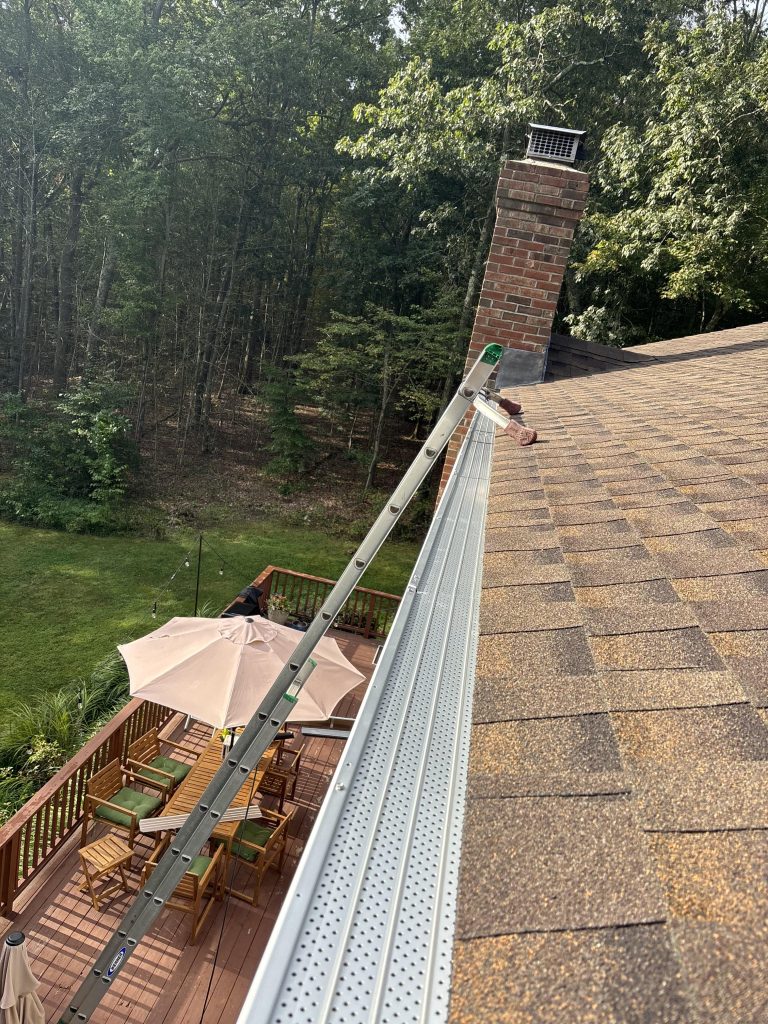
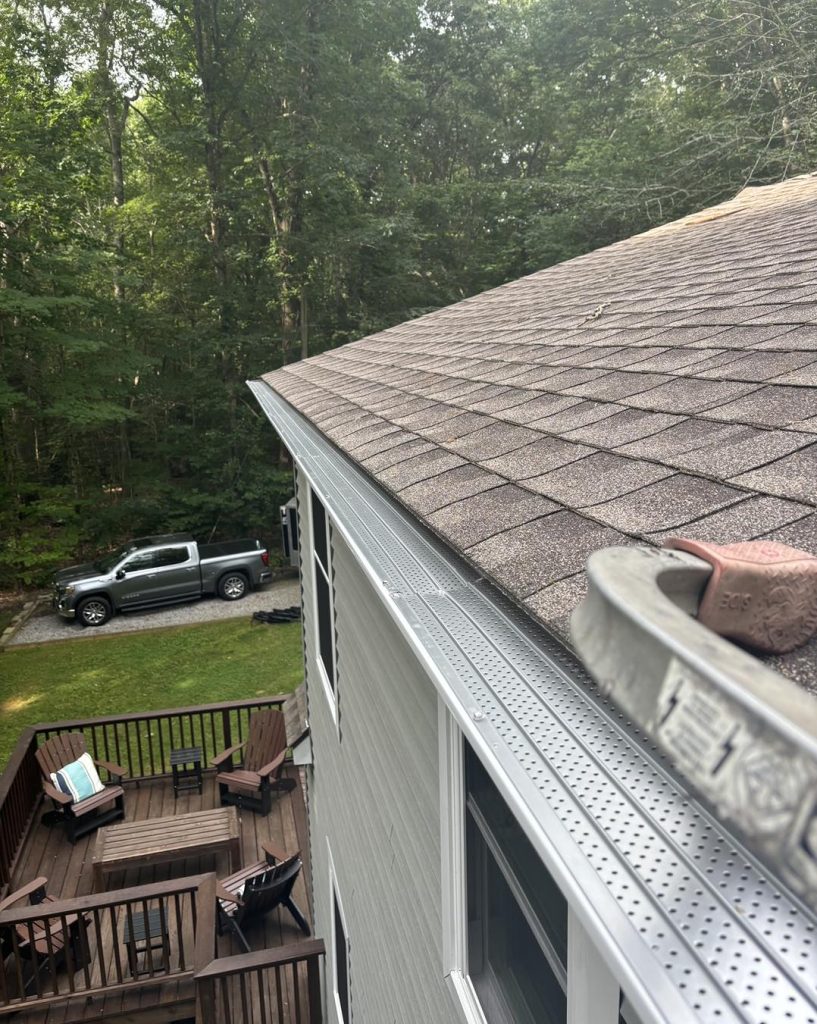
7. Gutter Guards Restricting Water Flow
Gutter guards help keep leaves and larger debris out of gutter channels.
However, certain guard designs can struggle with concentrated runoff or become coated with fine debris.
During heavy rainfall, water may pass over the guard instead of entering the gutter.
How to Fix It: We evaluate whether the guard design is compatible with the roof pitch, rainfall conditions, and gutter configuration.
Proper installation and periodic maintenance remain important.
How to Identify Why Your Gutters Overflow
The location of the overflow often provides useful clues.
| Gutter Symptom | Possible Cause |
|---|---|
| Overflow along the entire gutter | Insufficient system capacity |
| Water spilling near the downspout | Restricted outlet or downspout |
| Water collecting in the middle | Sagging or improper pitch |
| Water shooting past a roof valley | Concentrated runoff |
| Water running behind the gutter | Poor alignment or roof-edge flashing |
| Overflowing over gutter guards | Restricted water entry |
| Overflow only during intense storms | Insufficient drainage capacity |
We recommend observing the affected location safely from the ground during rainfall.
Avoid climbing ladders or attempting roof-level repairs during storms.
Can Overflowing Gutters Damage Your Home?
Yes. Repeated gutter overflow can create problems beyond the roofline.
Excess water may contribute to:
- Basement moisture and foundation seepage
- Soil erosion around landscaping
- Damaged fascia and soffits
- Stained or deteriorating siding
- Water intrusion around exterior walls
Proper gutter drainage protects the entire exterior system, not just the roof.
At Nor’East Exteriors, our gutter installation and replacement services include 5-inch and 6-inch seamless gutters, gutter guards, and customized drainage solutions.
Should You Repair or Replace Overflowing Gutters?
Not every overflowing gutter requires replacement.
Gutter repair may be appropriate when:
- The gutter pitch needs adjustment.
- A limited section has loose hangers.
- A downspout requires clearing or repositioning.
- A localized roof valley needs better runoff management.
Replacement may be more appropriate when:
- Existing gutters are consistently undersized.
- Multiple sections are sagging or deteriorated.
- The current layout cannot handle the roof’s drainage requirements.
- Repairs no longer provide reliable performance.
For additional budgeting guidance, read our related article, 2026 Gutter Installation Costs in CT: Pricing & Key Factors.
Frequently Asked Questions
Why do my gutters overflow only during heavy rain?
Heavy rainfall can exceed the gutter or downspout capacity. Poor pitch, roof valleys, and restricted outlets can also contribute to overflow.
Will installing larger gutters stop overflowing?
Larger gutters may help when insufficient capacity is the problem. However, downspout sizing, gutter alignment, and drainage outlets must also be evaluated.
Can clean downspouts still cause gutter overflow?
Yes. Downspouts may be too small, improperly positioned, or connected to restricted underground drainage pipes.
How do you fix gutters that overflow in the middle?
Overflow near the middle may indicate sagging, improper slope, or insufficient capacity. A professional inspection can identify the appropriate repair.
Stop Overflowing Gutters With Nor’East Exteriors Roofing & Siding
Clean gutters should direct rainwater away from your property, not send it cascading over the edges.
At Nor’East Exteriors Roofing & Siding, we help homeowners throughout Westbrook, Old Saybrook, Clinton, Madison, Guilford, and surrounding Connecticut shoreline communities resolve gutter drainage problems.
From correcting improperly positioned gutters to installing larger seamless systems, we evaluate the source of the problem before recommending a solution.