
Board and batten siding uses strong vertical lines that can make a New England home feel taller, cleaner, and more contemporary, while traditional lap siding uses horizontal courses that emphasize width and create the familiar Cape Cod, Colonial, and coastal character found throughout Connecticut. For many modern homes, the best answer is not choosing one profile exclusively. Combining board and batten on gables or entry sections with lap siding across the main walls can create a balanced custom exterior without losing classic New England appeal. Manufacturers now offer vertical vinyl, insulated vinyl, fiber cement, and composite-style products that deliver the look with far less upkeep than traditional painted wood.
At Nor’East Exteriors Roofing & Siding, we help Connecticut homeowners think beyond siding color. Direction, profile, texture, trim, and material combinations can completely change how a house looks from the road.
For anyone comparing board and batten vs lap siding, architectural proportions should come before trends.
Board and Batten vs. Lap Siding at a Glance
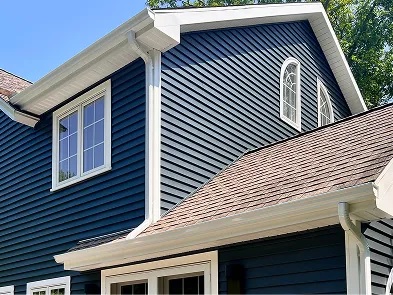
Board and batten siding creates vertical shadow lines. Traditional construction used wide vertical boards with narrower battens covering the seams. Modern systems can recreate that appearance with vinyl or fiber cement panels and coordinated trim. James Hardie specifically describes vertical panel siding paired with batten trim as a way to create the board-and-batten look commonly associated with modern farmhouse architecture.
Lap siding runs horizontally across the home. This familiar profile complements Cape Cod, Colonial, Craftsman, ranch, and coastal homes because the long horizontal courses visually reinforce the width of the structure. James Hardie lists both lap and vertical siding among profiles that can be selected according to architectural style.
When Board and Batten Works Best
Board and batten has become closely associated with the modern farmhouse exterior siding look, but farmhouse homes are far from the only application.
We often consider vertical siding for:
- Front-facing gables
- Tall entry sections
- Dormers
- Modern coastal homes
- Farmhouse renovations
- Contemporary additions
- Accent sections above porches or garages
Vertical lines draw attention upward, so board and batten can help a low or wide facade gain more visual height.
For Connecticut shoreline homes, vertical siding also works well when paired with restrained colors, natural textures, and simple trim. Our guide to modern coastal exterior trends explores how board and batten, warm neutrals, coastal colors, and mixed siding profiles are being combined on current New England exteriors.
Why Lap Siding Remains a New England Standard
Horizontal lap siding has survived generations of architectural trends because it works naturally with traditional New England proportions.
A Cape, Colonial, cottage, ranch, or coastal home can usually accept lap siding without changing the fundamental character of the architecture.
Lap siding also gives homeowners tremendous flexibility with trim, shutters, stone, shingles, and contrasting gables.
For a renovation where the goal is fresh rather than dramatically modern, horizontal siding may provide the safer design foundation.
The Best Exterior May Use Both
Some of our favorite exterior designs combine profiles rather than covering every wall with the same siding.
A typical combination might use:
Main walls: Horizontal lap siding
Front gable: Board and batten
Foundation or entry: Stone veneer
Accent area: Cedar-style shingles
Trim: Contrasting white, charcoal, or warm neutral
James Hardie recommends mixing siding profiles as a way to add texture and architectural interest, including combinations involving vertical board and batten, lap siding, and shingles.
Stone veneer can make this approach even stronger. The stone provides visual weight near the base of the home, while vertical siding draws the eye upward and horizontal lap keeps the overall design grounded.
Board and Batten Siding Cost
Board and batten siding cost depends heavily on the chosen material, total wall area, trim details, number of corners, gables, removal of existing siding, and whether the vertical profile covers the whole house or serves only as an accent.
A small board-and-batten gable can be far less costly than converting an entire exterior to a premium fiber cement system.
For that reason, we prefer evaluating the actual home rather than using a generic square-foot number that may not reflect the project.
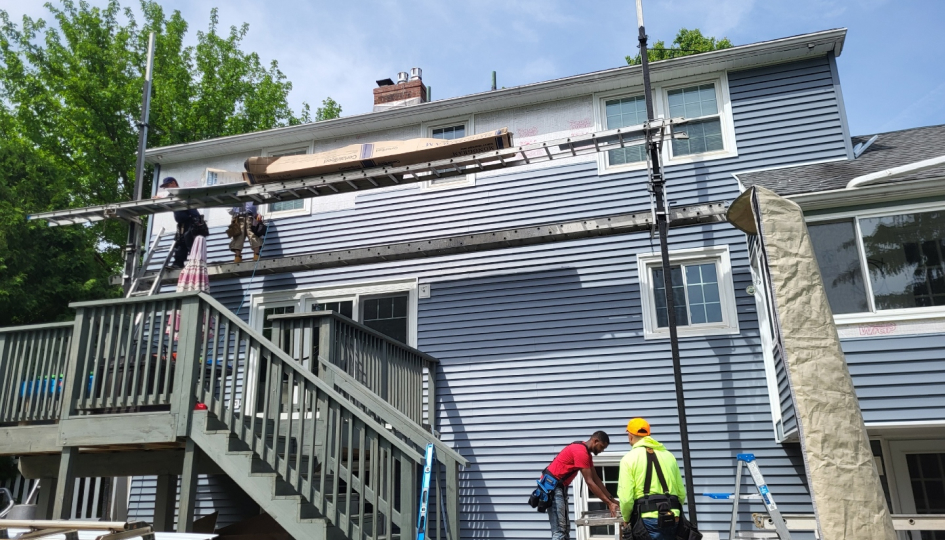
Our Connecticut siding contractor team installs vinyl, fiber cement, engineered products, insulated siding, trim, soffit, and related exterior components, allowing the design to be built around both architectural goals and budget.
Low-Maintenance Vertical Siding Options
Traditional wood board and batten can look beautiful, but homeowners who want less scraping, staining, painting, and moisture-related upkeep now have other choices.
CertainTeed offers vertical Board & Batten vinyl profiles engineered as interlocking panels and describes them as resistant to insects, rot, and decay while requiring relatively simple cleaning. Fiber cement panel systems provide another route to the same vertical aesthetic while offering resistance to moisture, pests, weather exposure, and fire.
That makes modern vertical siding practical for homeowners who want farmhouse or contemporary styling without committing to traditional wood maintenance.
What About Thermal Performance?
The direction of the siding itself does not determine whether the wall performs well thermally.
What matters more is the complete wall assembly, including insulation, air sealing, sheathing, and whether continuous insulation or an insulated siding product is used.
The U.S. Department of Energy explains that continuous exterior insulation can reduce thermal bridging through wall framing and improve overall building-envelope performance. Homeowners planning a full re-siding project therefore have an ideal opportunity to evaluate insulation and air sealing while exterior walls are accessible. Learn more from the U.S. Department of Energy.
Which Siding Style Fits Your Home?
Choose board and batten when the goal is stronger vertical emphasis, modern farmhouse character, contemporary contrast, or a dramatic gable.
Choose lap siding when the goal is timeless New England character, broad horizontal proportions, or a traditional Cape, Colonial, ranch, or coastal appearance.
Choose both when the home needs architectural depth without becoming visually busy.
The strongest exterior usually comes from matching siding lines to the structure instead of forcing one trend onto every elevation.
Design your custom home exterior with our siding experts at Nor’East Exteriors Roofing & Siding. We can compare siding profiles, colors, trim, stone accents, material options, and insulation upgrades around the architecture of your Connecticut home.