

Finding roof granules in gutters does not always mean your roof needs replacement. New asphalt shingles commonly shed excess manufacturing granules, while older shingles gradually lose their protective coating through weathering. However, excessive granule loss, visible bald shingles, dark patches, cracking, or leaks may indicate asphalt roof deterioration. A professional roof inspection can determine whether repairs or replacement are necessary.
Why Are Roof Granules Collecting in Your Gutters?
After cleaning your gutters, you might notice small, dark, sand-like particles collecting near the downspouts.
Those particles may be roofing granules that have separated from your asphalt shingles.
At Nor’East Exteriors Roofing & Siding, we help Connecticut shoreline homeowners identify roofing problems before minor damage becomes a major expense.
Granules serve an important purpose. They protect the asphalt coating from ultraviolet sunlight, contribute to weather resistance, and provide the shingles’ finished color.
When too many granules disappear, the underlying asphalt becomes more exposed to sunlight and weathering.
However, the amount, timing, and location of granule loss matter more than simply finding a few particles.
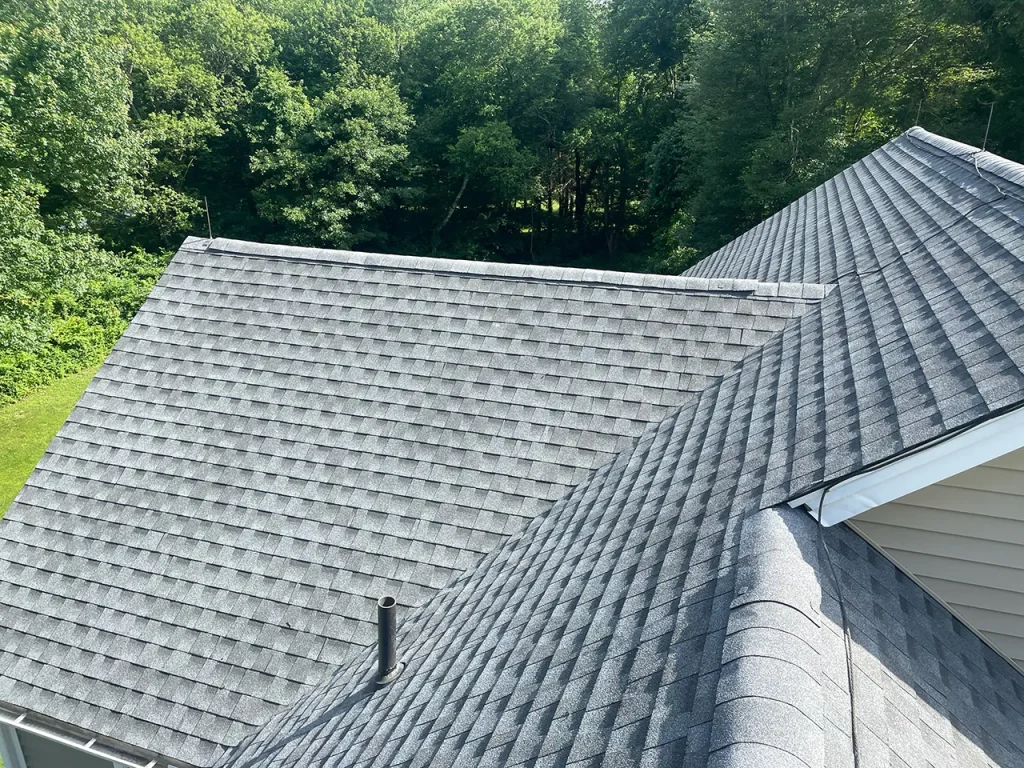
Is Shingle Granule Loss Normal?
Some shingle granule loss is expected throughout an asphalt roof’s service life.
Understanding the difference between ordinary shedding and deterioration helps prevent unnecessary replacement.
Normal Granule Loss on New Roofs
New asphalt shingles contain extra loose granules from manufacturing.
These particles can wash into gutters during the first several rainstorms.
According to GAF’s Technical Advisory Bulletin on Granule Loss, this initial shedding is generally normal and should gradually decrease.
If significant shedding continues after several months or the roof begins changing color, an inspection is recommended.
Granule Loss on Older Roofs
As shingles age, exposure to sunlight, seasonal temperature changes, wind, and rainfall gradually wears their surfaces.
A small amount of material in the gutters may reflect ordinary aging.
However, increasing granule accumulation alongside visible shingle damage deserves closer attention.
| Observation | Possible Meaning |
|---|---|
| Light granule shedding on a new roof | Normal manufacturing residue |
| Occasional granules on an older roof | Ordinary weathering |
| Sudden large amounts after a storm | Possible impact or wind damage |
| Dark, bare shingle patches | Significant protective coating loss |
| Granule loss with cracks or curling | Possible advanced roof deterioration |
5 Warning Signs That Granule Loss Is a Problem
1. Large Amounts of Roof Granules in Gutters
A sudden increase in coarse, dark particles may indicate accelerated shingle wear.
Pay particular attention when the quantity increases following severe weather.
We recommend documenting unusual accumulations and comparing them after subsequent rainstorms.
2. Bald Shingles or Exposed Asphalt
Bald shingles have lost enough surface granules to reveal darker asphalt underneath.
These exposed areas receive more direct ultraviolet exposure and may deteriorate faster.
Localized bald patches can result from physical damage, while widespread granule loss may indicate broader aging.
3. Cracked, Curling, or Brittle Shingles
Granule loss becomes more concerning when accompanied by visible structural changes.
Common warning signs include:
- Curling shingle edges
- Cracks across shingle surfaces
- Missing or broken tabs
- Dark, uneven patches
- Repeated roof leaks
When these conditions appear together, we recommend evaluating the roof’s remaining service life.
4. Granule Loss After Hail or Windstorms
Connecticut coastal properties frequently experience strong winds, heavy rainfall, and seasonal storms.
Hail can dislodge granules through impact, sometimes leaving concentrated dark spots.
Wind-driven debris and damaged shingles may also contribute to material loss.
However, granules in a gutter alone do not prove hail damage.
For additional warning signs, read our guide on how to identify hail damage on your roof without climbing a ladder.
5. Water Stains or Roof Leaks
Granule loss does not automatically cause an immediate roof leak.
However, advanced deterioration may occur alongside damaged flashing, failed shingle seals, or compromised roofing materials.
Watch for ceiling stains, damp attic insulation, or water marks near roof penetrations.
These symptoms deserve prompt professional attention.

What Should You Do When You Find Roof Granules?
We recommend a simple, safety-focused evaluation.
Step 1: Check the Roof’s Age
Review installation records or previous inspection reports.
Older roofs with increasing granule loss deserve closer attention.
Step 2: Inspect From the Ground
Use binoculars to look for bald spots, missing shingles, discoloration, or curling edges.
Avoid walking on the roof, which can dislodge additional granules and create fall hazards.
Step 3: Document Gutter Sediment
Photograph unusual accumulations near downspouts and record when they appear.
Step 4: Arrange a Professional Inspection
A roofing contractor can examine the shingles, flashing, ventilation, and overall roof condition.
At Nor’East Exteriors, our roof repair services help homeowners address damaged shingles, storm-related problems, and roof leaks.
Does Granule Loss Mean You Need a New Roof?
Not necessarily.
The best solution depends on how widespread the damage is.
Roof repair may be appropriate when:
- Damage affects a limited area.
- Surrounding shingles remain serviceable.
- A few shingles require replacement.
- The underlying roofing structure remains sound.
Roof replacement may be appropriate when:
- Bald shingles appear across large roof sections.
- Granule loss is widespread and progressive.
- Multiple areas show cracking or brittleness.
- Recurring leaks indicate broader roof deterioration.
We evaluate the roof’s overall condition before recommending either option.
Frequently Asked Questions
Are roof granules in gutters normal?
Yes. Small amounts are common, particularly after new roof installation. Heavy or increasing shedding on an older roof may indicate deterioration.
What do bald shingles look like?
Bald shingles often have dark, smooth-looking patches where the protective mineral granules have worn away, exposing the asphalt coating.
Can you replace missing granules on shingles?
Loose roofing granules generally cannot be reliably restored through ordinary homeowner maintenance. Damaged shingles may require professional replacement.
How long can a roof last after losing granules?
There is no universal timeline. Remaining service life depends on the severity of granule loss, roof age, material condition, and environmental exposure.
Protect Your Roof With Nor’East Exteriors Roofing & Siding
Roof granules in gutters can be harmless, or they can provide an early warning that your shingles are wearing out.
At Nor’East Exteriors Roofing & Siding, we help homeowners in Westbrook, Old Saybrook, Clinton, Madison, Guilford, and surrounding Connecticut shoreline communities evaluate roof damage and choose appropriate solutions.
Whether you’re concerned about bald shingles, storm damage, or an aging asphalt roof, our team can help.
Noticing excessive granules in your gutters? Call Nor’East Exteriors Roofing & Siding at (860) 256-8478 to schedule a professional roof assessment.