

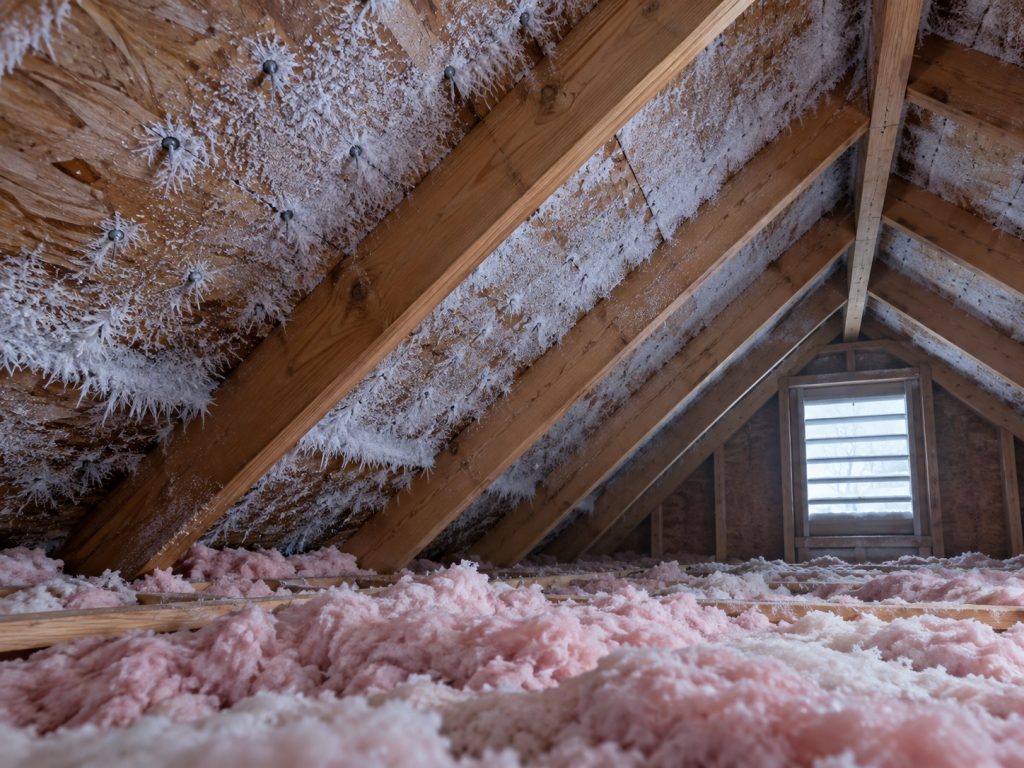
Frost in an attic usually forms when warm, moisture-filled indoor air leaks into a cold attic and reaches roof sheathing, nails, or framing below the dew point. During very cold Connecticut weather, that moisture can freeze instead of remaining liquid. Air leakage, high indoor humidity, inadequate insulation, and poor attic ventilation can all contribute. Repeated frost deserves attention because thawing can wet insulation and roof decking.
Finding frost on the underside of an attic roof can make it look as though the roof is leaking in winter.
Often, the water is actually coming from inside the home.
At Nor’East Exteriors Roofing & Siding, we look at the complete roof and attic system because winter moisture problems can involve air sealing, insulation, ventilation, indoor humidity, and roof-deck temperature rather than damaged shingles alone.
Why Does Frost Form Inside an Attic?
Frost forms when moisture reaches a surface cold enough for water vapor to condense and freeze.
During Connecticut winter weather, the roof deck can become extremely cold. Warm indoor air naturally carries moisture from everyday activities such as cooking, showering, laundry, and normal occupancy.
When that warm air escapes through gaps in the ceiling and enters a cold attic, moisture can collect on:
- Roof sheathing
- Roofing nails
- Rafters
- Metal fasteners
- Other cold attic surfaces
Building Science Corporation notes that moisture tends to appear first on the coldest surfaces and specifically documents frost forming on nails and roof sheathing in cold attics.
Is Attic Frost the Same as a Roof Leak?
No. Frost inside the attic does not automatically mean rain or snow is leaking through the roof.
A traditional roof leak starts outside and enters through failed shingles, flashing, penetrations, underlayment, or another opening.
Attic condensation starts with moisture already inside the house.
One clue is timing. If frost appears during very cold, dry weather without active precipitation, interior moisture is more likely to be involved.
However, a roof can have both condensation and exterior leakage, so we recommend evaluating the entire system rather than diagnosing the cause from frost alone.
What Causes Frost in an Attic?
1. Warm Air Leaking Into the Attic
Air leakage is one of the most important causes.
Warm household air can escape through:
- Attic access hatches
- Recessed lights
- Plumbing penetrations
- Electrical openings
- Wall top plates
- Ceiling gaps
- Exhaust-fan penetrations
Building Science Corporation emphasizes that air sealing is especially important because moisture-laden indoor air entering an attic can condense against cold roof sheathing.
2. High Indoor Humidity
Higher winter humidity means more moisture is available to move into the attic.
Possible contributors include:
- Humidifiers set too high
- Frequent showers
- Cooking
- Drying clothes indoors
- Damp basements or crawl spaces
- Inadequate household ventilation
A cold roof deck plus high indoor moisture creates favorable conditions for condensation and frost.
3. Inadequate or Uneven Insulation
Insulation helps limit heat transfer from the living space into the attic.
Missing, compressed, or uneven insulation can create warmer sections of the roof system and increase heat loss.
That same heat loss can also contribute to roof snow melting unevenly and forming ice dams near colder eaves. The U.S. Department of Energy notes that good air sealing, adequate attic insulation, and properly designed ventilation can help reduce attic heat transfer and ice-dam formation.
4. Poor Attic Ventilation
In a properly designed vented attic, outside air typically enters low at soffit vents and exits higher through ridge or other exhaust vents.
This airflow helps carry attic moisture outdoors.
Problems can develop when:
- Soffit vents are blocked
- Insulation covers intake vents
- Exhaust ventilation is inadequate
- Intake and exhaust are unbalanced
- Roof alterations interrupt airflow
Our guide to proper attic ventilation explains why simply adding more vents is not always the answer. Nor’East recommends looking for balanced intake and exhaust rather than treating one vent type as a universal fix.
What Happens When Attic Frost Melts?
This is where frost can become a larger problem.
When outdoor temperatures rise or sunlight warms the roof, frost can melt and drip onto:
- Attic insulation
- Ceiling materials
- Wood framing
- Roof decking
Homeowners may then notice stains or damp areas that resemble a roof leak.
Repeated wetting can be more concerning. Building Science guidance warns that moisture accumulation in roof sheathing can contribute to mold, decay, and deterioration when drying is inadequate.
Is a Small Amount of Attic Frost Normal?
A light, temporary amount during unusually cold conditions does not automatically mean major roof failure.
What matters more is the pattern and frequency.
More concerning signs include:
- Heavy frost covering large areas
- Frost returning repeatedly
- Wet roof sheathing after thawing
- Mold or dark staining
- Damp insulation
- Musty odors
- Rusted fasteners
- Water stains on ceilings
- Ice-dam problems outside
These symptoms suggest the attic’s moisture, air-sealing, insulation, or ventilation conditions deserve closer evaluation.
Can Better Ventilation Fix Attic Frost?
Sometimes ventilation is part of the solution, but ventilation alone should not automatically be treated as the cure.
Building Science Corporation specifically notes that air sealing should come before relying on ventilation, because stopping moisture-laden indoor air from entering the attic addresses the source of the problem.
A complete approach may involve:
- Finding ceiling air leaks
- Checking insulation coverage
- Reviewing indoor humidity
- Confirming soffit intake airflow
- Checking ridge or exhaust ventilation
- Inspecting roof sheathing for moisture damage
The right correction depends on whether the attic is designed as a vented or unvented roof assembly.
Can Bathroom Fans Cause Attic Frost?
Yes, especially when exhaust fans discharge into the attic instead of outdoors.
Bathroom air can contain a large amount of moisture. If that humid air enters a freezing attic, frost can form quickly on the roof deck.
Kitchen and dryer exhaust should also be evaluated if moisture seems concentrated near ductwork or penetrations.
Attic Frost and Ice Dams Can Share the Same Cause
Frost inside the attic and ice dams outside the roof can both point toward heat and moisture escaping from the living space.
Warm attic conditions can melt snow higher on the roof. Water then flows toward colder eaves and refreezes.
Nor’East’s Connecticut guide to attic ventilation explains how insulation, air leakage, and ventilation work together to reduce winter roof problems.
When Should a Roofer Inspect Attic Frost?
A professional evaluation makes sense when frost is widespread, keeps returning, produces dripping water after thawing, or appears alongside mold, ceiling stains, ice dams, or roof-deck deterioration.
Our roof repair services include evaluation of ventilation and moisture-related roof problems along with leaks, damaged shingles, flashing, and winter roof damage.
Stop the Moisture Before It Damages the Roof
Attic frost is usually a moisture-management warning rather than proof that the shingles have failed.
At Nor’East Exteriors Roofing & Siding, we look at the roof deck, attic airflow, insulation conditions, exterior roofing, and signs of moisture damage before recommending repairs.
The goal is not simply to remove visible frost. The goal is to determine why moisture is reaching a freezing roof surface in the first place.
For additional technical background, see the U.S. Department of Energy guidance on cold-climate roof and attic moisture.
Frequently Asked Questions
Why is there frost on my attic roof?
Warm, humid indoor air is likely reaching cold roof sheathing or fasteners and freezing. Air leaks, humidity, insulation, and attic ventilation can all contribute.
Will attic frost cause mold?
Repeated condensation and poor drying can raise the risk of mold and wood deterioration. A single light frost event does not automatically mean mold is present.
Does attic frost mean my roof leaks?
Not necessarily. Attic frost often comes from indoor moisture rather than exterior water intrusion.
Should attic vents be added to stop frost?
Not automatically. Air sealing, insulation, humidity, and ventilation should be evaluated together before changing the vent system.
Why does water drip from my attic when temperatures warm up?
Accumulated frost can melt as the roof warms, creating dripping water even when it is not raining.