
If you live along the Connecticut shoreline in towns like Westbrook, Old Saybrook, or Madison, you know that the “salt life” comes with a price. Between the constant moisture from the Long Island Sound, abrasive salt air, and our brutal New England winters, your home’s exterior is under a 24/7 atmospheric assault.
When it comes to building a deck, the material you choose determines whether you’ll be relaxing with a view or spending every weekend sanding, staining, and swapping out rotted boards.
At Nor’East Exteriors Roofing & Siding, we’ve seen how different materials hold up against the coast. Here is the breakdown of wood versus composite for your next shoreline project.
1. Pressure-Treated Wood: The Traditional Choice
Pressure-treated (PT) lumber is the most common decking material due to its affordability. However, on the shoreline, “affordable” can quickly become “high-maintenance.”
- The Struggle: Wood is organic and porous. Salt air pulls moisture out of the wood, causing it to warp, crack, and splinter faster than it would inland.
- The Maintenance: To keep a wood deck safe and looking good in a town like Clinton or Guilford, you’ll need to power wash and reseal it every 1–2 years. If left untreated, the salt and sun will turn it a weathered grey, and structural “shoreline fatigue” will set in.
2. Composite Decking: The Coastal Champion
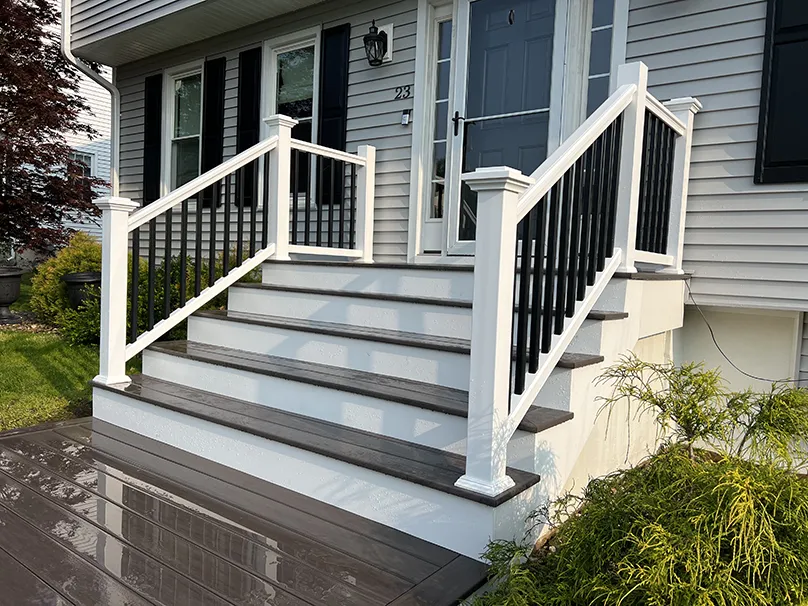
Modern composites (like Trex or AZEK) are engineered from a blend of wood fibers and recycled plastics, usually capped with a hard, protective shell.
- The Shoreline Advantage: Composites are virtually impervious to rot, mold, and wood-boring insects. More importantly, they don’t “breath” like wood, meaning they won’t expand and contract violently during our humid summers and freezing winters.
- The Maintenance: A simple soap-and-water wash once or twice a year is all it takes. For homeowners who want their deck to match their siding or windows perfectly, composite offers a massive range of fade-resistant colors.
3. The Hidden Killer: Hardware and Salt Air
Regardless of the decking surface you choose, the “skeleton” of your deck is what keeps you safe. On the CT coast, standard galvanized nails and joist hangers can rust through in a matter of years.
- The Nor’East Standard: We recommend 304 or 316-grade stainless steel fasteners for all shoreline builds. Whether we are performing a roof repair or building a custom deck, using the right hardware is the difference between a 10-year lifespan and a 30-year lifespan.
4. Aesthetics and Heat Retention
- Wood: Stays cooler under the direct summer sun, which is great if your deck has no shade.
- Composite: Darker composite boards can get hot, but newer “cool-deck” technologies reflect more UV rays. At Nor’East Exteriors, we help you select the right shade to ensure your feet stay comfortable even in mid-July.
The Verdict: Which Should You Choose?
- Choose Wood if you love the natural look, are on a tighter upfront budget, and don’t mind the recurring labor of staining.
- Choose Composite if you want a “set-it-and-forget-it” lifestyle and want to maximize your home’s resale value with a material that looks brand new for decades.
Trust the Shoreline Experts
At Nor’East Exteriors Roofing & Siding, we don’t just build decks; we build exterior solutions that protect your entire home-from your gutters to your roof. We understand the unique wind loads and moisture challenges of the Connecticut coast.
Ready to upgrade your outdoor living space? Contact Nor’East Exteriors today for a free, no-pressure estimate on your new deck, roofing, or siding project!